
Beach House Dreams? Don't Overlook These Red Flags!
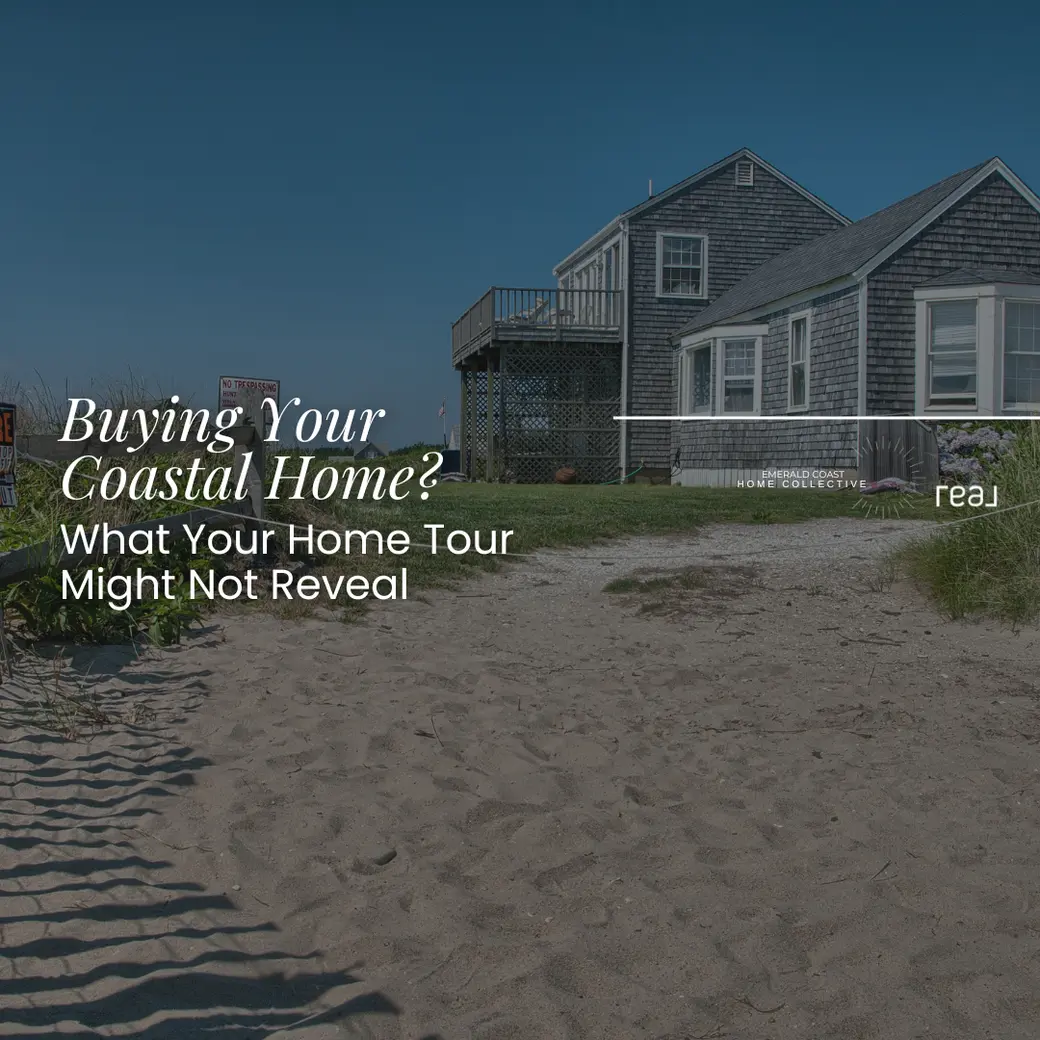
Buying a home along the Emerald Coast can be exciting—but a beautiful view and beach-town charm shouldn’t distract you from the details.
From Pensacola to Destin, 30A, Panama City Beach, and the surrounding communities, coastal properties have considerations that may not be apparent during a quick showing. Weather exposure, moisture, insurance requirements, maintenance, and location can all affect the true cost and long-term enjoyment of a home. As you walk through a property, keep an eye out for these 7 red flags.
1. Signs of Water Intrusion or Moisture
A fresh coat of paint can make a home look perfect—but don't let cosmetics hide potential moisture problems. During your tour, look closely around:
Windows and exterior doors
Ceilings and corners
Baseboards and flooring
Closets and cabinets
Attics and garages
Areas beneath sinks and around plumbing
Watch for staining, bubbling paint, warped flooring, musty odors, or unusual patches of fresh paint. On the Emerald Coast, it's especially important to understand how a property has handled heavy rain, tropical weather, and moisture over time. What looks like a small cosmetic issue could indicate a larger drainage, roofing, plumbing, or water intrusion problem.
Don't just ask, "Has there ever been water damage?" Ask what caused it, when it happened, and how it was repaired.
2. An Aging Roof
The roof may not be the first thing you notice when touring a home, but it can be one of the most important. Look for visibly worn shingles, missing materials, sagging areas, damaged flashing, or evidence of previous repairs. Then ask for documentation showing when the roof was installed or replaced.
Roof age can also matter when it comes to obtaining homeowners insurance. Florida insurers may consider factors such as the home's age, construction, location, and the age and type of the roof when determining whether and how to insure a property. A home with a great kitchen and an aging roof may not be the bargain it first appears to be.
3. Coastal Weather and Flood Concerns
Living near the Gulf is part of what makes the Emerald Coast so appealing—but proximity to the water means buyers should understand a property's exposure to coastal weather and flooding. Before falling in love with a home, investigate:
The property's flood zone
Past flooding or storm damage
Drainage around the property
Elevation and foundation characteristics
Evacuation considerations
Whether flood insurance is recommended or required
Previous insurance claims, where available
One important distinction: standard homeowners insurance generally does not cover flood damage. Flood coverage is typically purchased separately. Don't assume that a home outside a high-risk flood zone has zero flood risk. Ask questions, review the property's flood information, and discuss coverage with an insurance professional before making a decision.
4. Insurance Costs That Don't Match Your Expectations
A home's purchase price is only part of the financial picture. Before committing to a property, get an insurance quote based on the specific home, rather than estimating your future premium from what the current owner pays—or what a nearby property costs to insure.
Insurance companies may consider factors including the home's construction, location, age, roof, plumbing, electrical systems, and hurricane-mitigation features. Also ask about deductibles and coverage details. Florida homeowners may have separate considerations for hurricane/windstorm and flood coverage. A lower-priced home isn't necessarily the lower-cost home.
5. Deferred Maintenance Disguised as "Character"
Some older homes have wonderful character. Others have years of deferred maintenance. During your tour, look beyond the staging and ask yourself:
Are doors and windows opening properly?
Are there cracks that deserve further inspection?
Does the HVAC system appear well maintained?
Are there signs of old plumbing leaks?
Does the electrical system appear outdated?
Are decks, porches, railings, and exterior structures in good condition?
Does the landscaping appear to be directing water away from the home?
You don't need to diagnose every problem during the showing. Your goal is to **identify issues that deserve a closer look during the inspection period**.
6. The Neighborhood Doesn't Work for Your Lifestyle
You aren't just buying four walls—you are buying the location. Take a few minutes to explore the surrounding area. Consider traffic, road access, noise, nearby development, parking, walkability, and how the neighborhood feels at different times of day.
For Emerald Coast properties, buyers may also want to consider how seasonal tourism and vacation-rental activity affect the area. Ask yourself: Would I enjoy living here on a busy summer weekend—not just during today's showing? A property can be beautiful while still being the wrong fit for your lifestyle.
7. The Numbers Don't Tell the Whole Story
Finally, don't evaluate a home based solely on the listing price or monthly mortgage estimate. Consider the complete ownership picture:
Mortgage + taxes + insurance + flood coverage + HOA fees + utilities + maintenance + future repairs
For coastal properties, maintenance and insurance deserve particular attention. Before closing, you'll want a clear understanding of the home's condition and the ongoing costs associated with owning it. And remember: an inspection isn't just about finding reasons to walk away. It's about learning what you're buying and making an informed decision.
The Bottom Line
The Emerald Coast offers an incredible lifestyle, but buying a coastal home requires more than falling in love with the view. Look beyond the staging. Ask questions. Check the details. Get the appropriate inspections. Understand the insurance. And investigate the neighborhood.
The goal isn't to find a home with absolutely no flaws—that's rarely realistic. The goal is to understand the property's potential problems and costs before you make one of the biggest financial decisions of your life.
Touring an Emerald Coast Home?
Bring a critical eye, take plenty of notes, and don't be afraid to ask questions. A knowledgeable local real estate professional can help you identify questions to investigate, understand local considerations, and navigate the due-diligence process—so you can make your decision with confidence.
Your dream home should look good on the tour—and make sense after you take a closer look.
From Pensacola to Destin, 30A, Panama City Beach, and the surrounding communities, coastal properties have considerations that may not be apparent during a quick showing. Weather exposure, moisture, insurance requirements, maintenance, and location can all affect the true cost and long-term enjoyment of a home. As you walk through a property, keep an eye out for these 7 red flags.
1. Signs of Water Intrusion or Moisture
A fresh coat of paint can make a home look perfect—but don't let cosmetics hide potential moisture problems. During your tour, look closely around:
Windows and exterior doors
Ceilings and corners
Baseboards and flooring
Closets and cabinets
Attics and garages
Areas beneath sinks and around plumbing
Watch for staining, bubbling paint, warped flooring, musty odors, or unusual patches of fresh paint. On the Emerald Coast, it's especially important to understand how a property has handled heavy rain, tropical weather, and moisture over time. What looks like a small cosmetic issue could indicate a larger drainage, roofing, plumbing, or water intrusion problem.
Don't just ask, "Has there ever been water damage?" Ask what caused it, when it happened, and how it was repaired.
2. An Aging Roof
The roof may not be the first thing you notice when touring a home, but it can be one of the most important. Look for visibly worn shingles, missing materials, sagging areas, damaged flashing, or evidence of previous repairs. Then ask for documentation showing when the roof was installed or replaced.
Roof age can also matter when it comes to obtaining homeowners insurance. Florida insurers may consider factors such as the home's age, construction, location, and the age and type of the roof when determining whether and how to insure a property. A home with a great kitchen and an aging roof may not be the bargain it first appears to be.
3. Coastal Weather and Flood Concerns
Living near the Gulf is part of what makes the Emerald Coast so appealing—but proximity to the water means buyers should understand a property's exposure to coastal weather and flooding. Before falling in love with a home, investigate:
The property's flood zone
Past flooding or storm damage
Drainage around the property
Elevation and foundation characteristics
Evacuation considerations
Whether flood insurance is recommended or required
Previous insurance claims, where available
One important distinction: standard homeowners insurance generally does not cover flood damage. Flood coverage is typically purchased separately. Don't assume that a home outside a high-risk flood zone has zero flood risk. Ask questions, review the property's flood information, and discuss coverage with an insurance professional before making a decision.
4. Insurance Costs That Don't Match Your Expectations
A home's purchase price is only part of the financial picture. Before committing to a property, get an insurance quote based on the specific home, rather than estimating your future premium from what the current owner pays—or what a nearby property costs to insure.
Insurance companies may consider factors including the home's construction, location, age, roof, plumbing, electrical systems, and hurricane-mitigation features. Also ask about deductibles and coverage details. Florida homeowners may have separate considerations for hurricane/windstorm and flood coverage. A lower-priced home isn't necessarily the lower-cost home.
5. Deferred Maintenance Disguised as "Character"
Some older homes have wonderful character. Others have years of deferred maintenance. During your tour, look beyond the staging and ask yourself:
Are doors and windows opening properly?
Are there cracks that deserve further inspection?
Does the HVAC system appear well maintained?
Are there signs of old plumbing leaks?
Does the electrical system appear outdated?
Are decks, porches, railings, and exterior structures in good condition?
Does the landscaping appear to be directing water away from the home?
You don't need to diagnose every problem during the showing. Your goal is to **identify issues that deserve a closer look during the inspection period**.
6. The Neighborhood Doesn't Work for Your Lifestyle
You aren't just buying four walls—you are buying the location. Take a few minutes to explore the surrounding area. Consider traffic, road access, noise, nearby development, parking, walkability, and how the neighborhood feels at different times of day.
For Emerald Coast properties, buyers may also want to consider how seasonal tourism and vacation-rental activity affect the area. Ask yourself: Would I enjoy living here on a busy summer weekend—not just during today's showing? A property can be beautiful while still being the wrong fit for your lifestyle.
7. The Numbers Don't Tell the Whole Story
Finally, don't evaluate a home based solely on the listing price or monthly mortgage estimate. Consider the complete ownership picture:
Mortgage + taxes + insurance + flood coverage + HOA fees + utilities + maintenance + future repairs
For coastal properties, maintenance and insurance deserve particular attention. Before closing, you'll want a clear understanding of the home's condition and the ongoing costs associated with owning it. And remember: an inspection isn't just about finding reasons to walk away. It's about learning what you're buying and making an informed decision.
The Bottom Line
The Emerald Coast offers an incredible lifestyle, but buying a coastal home requires more than falling in love with the view. Look beyond the staging. Ask questions. Check the details. Get the appropriate inspections. Understand the insurance. And investigate the neighborhood.
The goal isn't to find a home with absolutely no flaws—that's rarely realistic. The goal is to understand the property's potential problems and costs before you make one of the biggest financial decisions of your life.
Touring an Emerald Coast Home?
Bring a critical eye, take plenty of notes, and don't be afraid to ask questions. A knowledgeable local real estate professional can help you identify questions to investigate, understand local considerations, and navigate the due-diligence process—so you can make your decision with confidence.
Your dream home should look good on the tour—and make sense after you take a closer look.
Categories
- All Blogs (179)
- Eat (25)
- Emerald Coast Updates (33)
- Holiday Ideas (21)
- Home Buying Guide (73)
- Home Owner Tips (68)
- Homes For Sale Along The Emerald Coast (26)
- Investing Tips (51)
- Living in 30A (72)
- Market Update (43)
- Play (43)
- Relocation Guide (52)
- Schools in the Emerald Coast (2)
- Stay (44)
- Weekend Guide (8)
Recent Posts

A Little Coastal Luxury for Your Bathroom!

Bring Fall Comfort to Your Backyard
Picture-Perfect Listings Start Here!

Real Estate, Wealth & Legacy
Two Styles, One Coast: Modern vs. Traditional Homes

Looking for the Perfect Neighborhood? Start Here.
Get Home Loan Ready: Improve Your Credit First!

Escape the Home Office: Stops for Coastal Digital Nomads!

Don't Just Bid—Win Smarter!
GET MORE INFORMATION
